

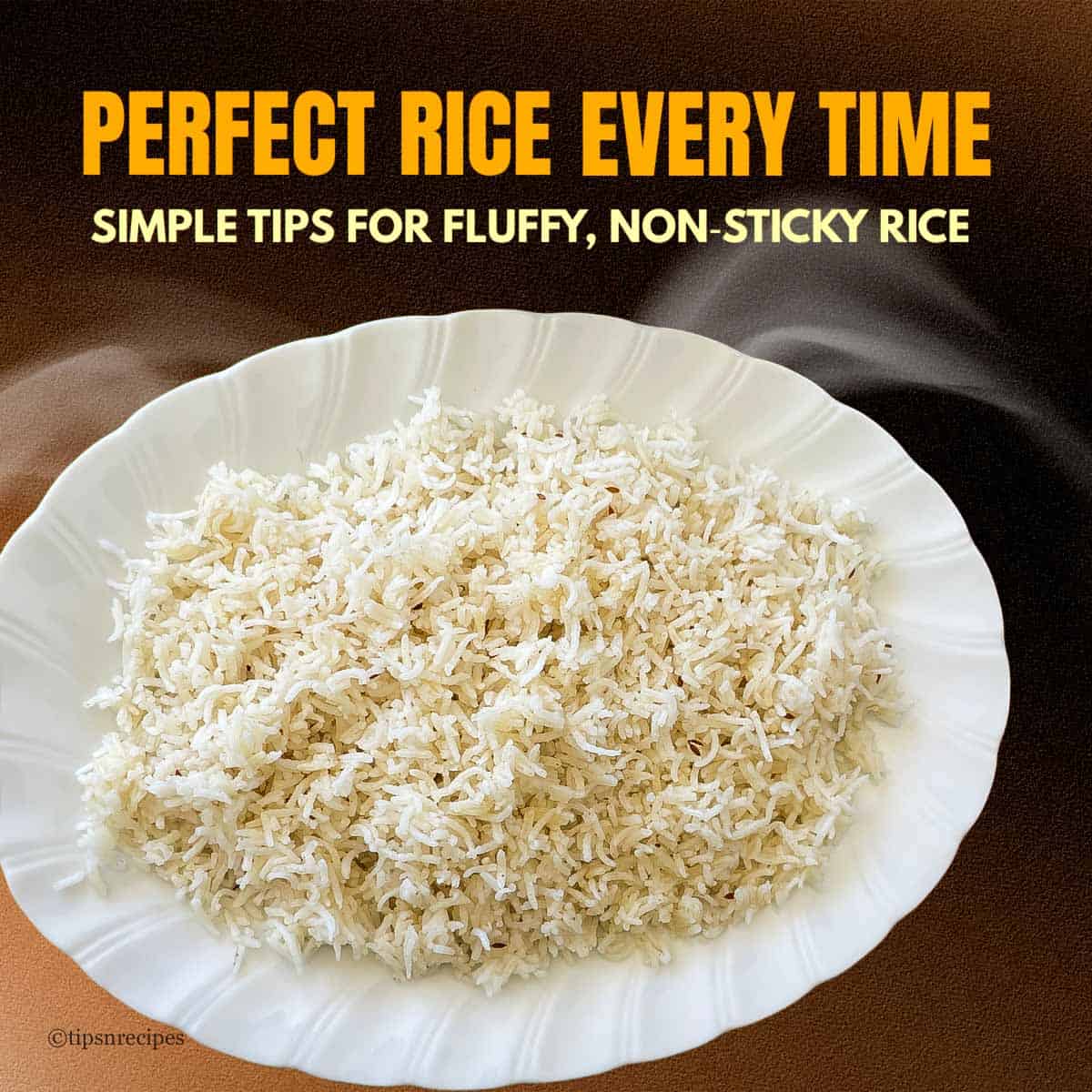
If you've been dealing with mushy, sticky, or unevenly cooked rice, these 8 tips to perfect rice in a rice cooker (No‑fail guide) are exactly what you need. Don't worry! It only takes a few steps to fix the issues.
Once you master these basics, you can easily use perfectly cooked rice to make quick dishes like lemon rice with leftover rice, or flavorful variations like cumin rice in rice cooker.
These simple rice cooker tips will help you get fluffy, non-sticky rice every time, no guesswork needed!
Jump to:
❓Why use a rice cooker?
Hands‑off convenience
Add the rice and water, close the lid, and walk away. The cooker does the rest while you prep the rest of your meal.
No risk of burning or boiling over
The automatic shut‑off and "warm" mode prevent scorched bottoms and messy spills.
Perfect for all skill levels
Whether you're a beginner or an experienced cook, a rice cooker removes the variables that often lead to mushy or undercooked rice.
Versatile beyond rice
Many models can also steam vegetables, cook quinoa, make porridge, or even prepare one‑pot meals.
🔥 8 Tips to perfect rice in rice cooker
The good news is that with a handful of simple tips, you can get perfectly fluffy, restaurant‑style rice every time. If you just want consistent results, this foolproof guide will help you master rice cooker rice with ease.
1. Use the same container for measuring
Always measure the rice and water using the same container to maintain a consistent ratio. For example, if you scoop your rice with a bowl, use that exact same bowl to measure the water. This ensures the proportions stay balanced, regardless of the container size, and helps the rice cook evenly every time.
2. Always rinse the rice
A rice cooker can give you perfectly fluffy, non‑sticky rice, but only if the excess surface starch is rinsed away first. Raw rice naturally has a fine layer of starch on the outside that makes it stick together once it starts cooking.
Removing it is key to getting those beautifully separated grains. Pour water over the rice and gently agitate it with your hand, almost like you're lightly swirling or massaging the grains. This movement helps loosen the starch coating, so it can wash away easily.
Drain and repeat several times, and you'll notice the water gradually shifting from milky to clearer. Once the water is noticeably clearer, you've removed enough starch for the rice to cook up light, fluffy, and perfectly separate in the rice cooker.
In short:
- Rinse the rice several times (usually 4-5) until the water becomes noticeably clearer.
- Use your fingers to gently agitate the grains as this loosens the surface starch that causes clumping.
3. Soak for better texture (Optional)
Soaking the rice is an optional step, but it makes a noticeable difference in both texture and cooking quality.
When you soak the grains, they slowly absorb water and begin to soften from the inside. This gentle hydration helps the rice cook more evenly, so the grains stay tender without breaking or becoming mushy. It also shortens the overall cooking time because the rice has already absorbed some moisture before it even hits the pot.
Soaking is especially helpful for long‑grain varieties like basmati or jasmine, where you expect each grain to be separated and fluffy. Even a quick 15-20 minute soak allows the grains to relax, elongate, and cook more uniformly. As a bonus, soaking helps rinse away excess surface starch, which keeps the rice from becoming sticky or clumpy.
This small step adds just a few minutes to your prep, but gives beautifully cooked rice with a lighter, softer texture every time.
Soaking rice for 15-20 minutes before cooking:
- Makes grains longer and softer.
- Helps cook evenly.
- Reduce the overall cooking time.
4. Use the right rice-to-water ratio
The rice‑to‑water ratio is one of the biggest factors in how the rice turns out as fluffy, firm, or mushy.
Every type of rice absorbs water differently, so getting the ratio right ensures the grains cook evenly and reach the perfect texture. Too much water and the rice becomes soft and sticky; too little and the grains stay firm or undercooked in the center.
For most long‑grain varieties like basmati or jasmine, a ratio between 1:1.5 and 1:2 (rice to water) usually results in beautifully separate, fluffy grains.
Once you find the ratio that gives you the texture you love, stick with it. Rice becomes wonderfully predictable when the measurements are right.
Getting the ratio right is the most important step.
- Basmati rice: 1 cup rice: 2 cups water (if soaked)
- Basmati rice: 1 cup rice: 2 cups water + 0.5 cup water extra (if unsoaked)
- Jasmine rice: 1 cup rice: 1.5 cups water (if soaked)
- Jasmine rice: 1 cup rice: 1.5 cups water + 0.5 cup water extra (if unsoaked)
- Brown rice: 1 cup rice: 2.25 cups water (if soaked)
- Brown rice: 1 cup rice: 2.25 cups water +0.5 cup water (if unsoaked)
5. Add salt and a little fat
A small amount of salt and ghee or butter can completely elevate the flavor of plain rice cooked in a rice cooker.
Salt seasons the grains from the inside as they cook, so every spoonful tastes balanced rather than bland. Even a pinch makes a noticeable difference, especially if you're serving the rice alongside curries, dals, or stir‑fries.
Ghee adds a gentle richness and a warm, buttery aroma that coats each grain without making the rice heavy. As the rice cooks, the ghee melts and spreads evenly, helping the grains stay separate and glossy. It also prevents the rice from sticking together, giving you a soft, fluffy texture with a subtle hint of nuttiness.
To use, simply add your rinsed rice and water to the cooker, sprinkle in the salt, and drizzle a little ghee on top before switching it on. The rice absorbs the seasoning as it steams, resulting in beautifully fragrant and flavorful rice with almost no extra effort.
Adding salt and ghee to rice:
- Prevent the sticking of grains.
- Improve texture.
- Bring a rich flavor.
6. Avoid stirring while cooking
Stirring rice during the cooking cycle interferes with the controlled heat and moisture distribution that rice cookers are engineered to maintain.
A rice cooker works by bringing the water and rice to a steady simmer, then allowing the grains to absorb moisture at a predictable rate.
As the water level drops, the temperature rises, triggering the cooker's sensor to switch from "cook" to "warm." This process depends on stillness - the rice must remain undisturbed so the heat can move evenly from the bottom up.
When you stir the rice:
- You break the grains, increasing surface starch release.
- More starch enters the water, raising viscosity and causing clumping.
- Heat distribution is disrupted, leading to uneven cooking as some grains overcook while others remain firm.
- The sensor may misread moisture levels because stirring redistributes water and can delay the switch to "warm."
Rice cookers are calibrated to cook rice uniformly without manual intervention. Once you close the lid, the cooker relies on stable thermal gradients and consistent water absorption. Stirring collapses that structure.
For the best results, let the rice cook undisturbed.
Stirring rice while cooking may:
- Disrupt the cooking cycle.
- Lead to mushy, sticky rice.
7. Let the rice rest after cooking
Once your rice cooker switches from "Cook" to "Warm," don't open the lid right away. Let the rice sit undisturbed for 5-10 minutes.
This short resting period is more important than most people realize. When the cooker's cook mode switches off, the rice is almost done, but not fully. Inside the pot, there's still trapped steam circulating through the grains.
Allowing the rice to rest gives that residual steam time to finish the cooking process gently and evenly.
During this phase:
- The grains firm up instead of breaking or turning mushy.
- Moisture redistributes, so the top layer becomes as fluffy as the bottom.
- Excess steam escapes gradually, preventing clumping.
- The texture stabilizes, giving you light, separate grains.
Those extra few minutes make the difference between "good" rice and perfectly fluffy, restaurant‑style rice.
When the cooker switches to "warm,"
- Let the rice sit for 5-10 minutes.
- This allows the steam to redistribute and firm up the grains.
8. Gentle fluff (as shown in video below)
Once the rice has rested, use a fork or rice paddle to gently fluff the grains; avoid stirring.
Fluffing is a light, lifting motion that separates the grains without breaking them. When you slide the fork or paddle under the rice and gently lift, you're allowing trapped steam to escape and giving the grains room to breathe. This keeps the texture airy and prevents clumping.
Stirring, on the other hand, is more aggressive. When you stir:
- The grains rub against each other, causing them to break.
- Broken grains release extra starch, which makes the rice sticky or gummy.
- The texture becomes dense, losing that fluffy, restaurant‑style finish.
Think of fluffing as "loosening" the rice rather than mixing it. A few gentle lifts are all it takes to turn perfectly cooked rice into beautifully separate, soft grains.
Use a fork or rice paddle to gently fluff the rice.
👉Avoid stirring as it can break grains and make rice sticky.
🍽️ What to serve with rice
Serve it with:
Lentils, such as daal tadka, black lentils, or white lentils, paired with chutneys, make for a comforting meal.
Curries such as rajma curry, kadi, chickpea curry, curried green peas, and matar mushroom masala.
Meat like mutton curry and chicken curry.
Cooling sides like cucumber raita and mixed veg raita for a light, cooling, and refreshing meal.
🍛 Variations
Add finely chopped vegetables for a quick one-pot meal.
Cook rice in vegetable broth for extra flavor.
Add whole spices like cumin, cardamom, cloves, or bay leaf.
Check my jeera rice in rice cooker recipe for a flavorful twist.
🍽️ What to make with perfectly cooked rice
- Lemon rice:
- Turn leftover rice into a fresh, tangy dish using this easy lemon rice with leftover rice, or
- Simply mix in a spoon of homemade lemon rice paste premix for a quick version.
- Turmeric rice: Fry onions until golden, then stir in rice with turmeric, chilli, and salt for a warm, comforting bowl.
- Egg fried rice: Toss the rice with egg fry masala and sauté briefly to create a quick, flavorful egg fried rice.
- Vegetable rice: Add sautéed or steamed vegetables.
- Fried Rice/curd Rice: Quick, flavorful options.
💡 Pro Tips
Use the measuring cup that comes with your rice cooker.
Rinse rice well before cooking.
Fluffing too aggressively can break the grains.
Don't leave rice in "Warm" mode for too long.
For meal prep, store leftover rice in an airtight container
✅ Conclusion
Making perfect rice in a rice cooker is easy once you know these simple secrets. With the right ratio, proper rinsing, and a little patience, you'll get fluffy, delicious rice every time.
Try these tips today, and you'll never struggle with rice again!
👉 Don't forget to explore more easy recipes on Tips n Recipes!


Follow me on Pinterest, Facebook, TikTok, Flipboard, and Instagram for more! Subscribe to my Newsletter and YouTube channel for updates!
Tried these tips? Comment below and share your perfectly cooked rice photos on Instagram with the hashtag #tipsnrecipes
The nutrition label may vary depending on your specific ingredients and brands. Tipsnrecipesblog.com is not responsible for any loss or damage resulting from your reliance on nutritional information.
Copyright Notice © tipsnrecipesblog.com - All content, including images and videos, is copyright-protected.




Leave a Reply